A research and design sprint with New Yorkers navigating the affordable housing process.
Duration: 5-day research and ideation sprint
My Role: UX Designer and project lead
My Team: Myself and two other Blue Ridge Labs fellows
The project
This project was a one-week community-based design sprint conducted during a fellowship at Blue Ridge Labs.
The goal of this sprint was to propose a tech intervention that would assist New Yorkers moving through the affordable housing process and get community feedback. The insights and recommendations I delivered from this sprint were added to Blue Ridge Labs’s knowledge repository for potential future product development.
My role
As the UX Designer and project lead, I developed the brief for this project; aligned internal stakeholders; contacted organizations in the affordable housing and homeless shelter space; screened research participants; wrote a focus group script; led a co-design session with New Yorkers who have experience with the shelter system; designed a mid-fidelity clickable prototype in Figma; and collected user feedback.
Deliverables
Interview transcripts
Clickable low-fidelity Figma prototype
What I learned
How to facilitate a co-design session
How to chart a complex problem space on an extremely compressed timeline
Project Overview
The challenge: How might we alleviate some of the difficulties of navigating New York City’s broken housing system?
I started this project by organizing a virtual focus group with six people who have experience navigating the city’s homeless shelters and affordable housing lotteries. I decided to start this way because I wanted to understand more deeply the specific challenges that face New Yorkers in this arena. After analyzing the transcript of the focus group with my colleagues, what came through was the extreme lack of care that people experience while navigating these systems, and the opacity of the process. In particular, many people mentioned that when applying for affordable housing, they were confused by the documentation needed and the income requirements, and they felt they were sending applications “into the void” and never hearing back.
The next step of our research process was in-depth interviews with professionals at two direct-service organizations (Picture The Homeless and Henry Street Settlement) and one government employee at New York Housing Preservation and Development. I chose these people to speak with because I wanted systems-level insight from people working in this area.
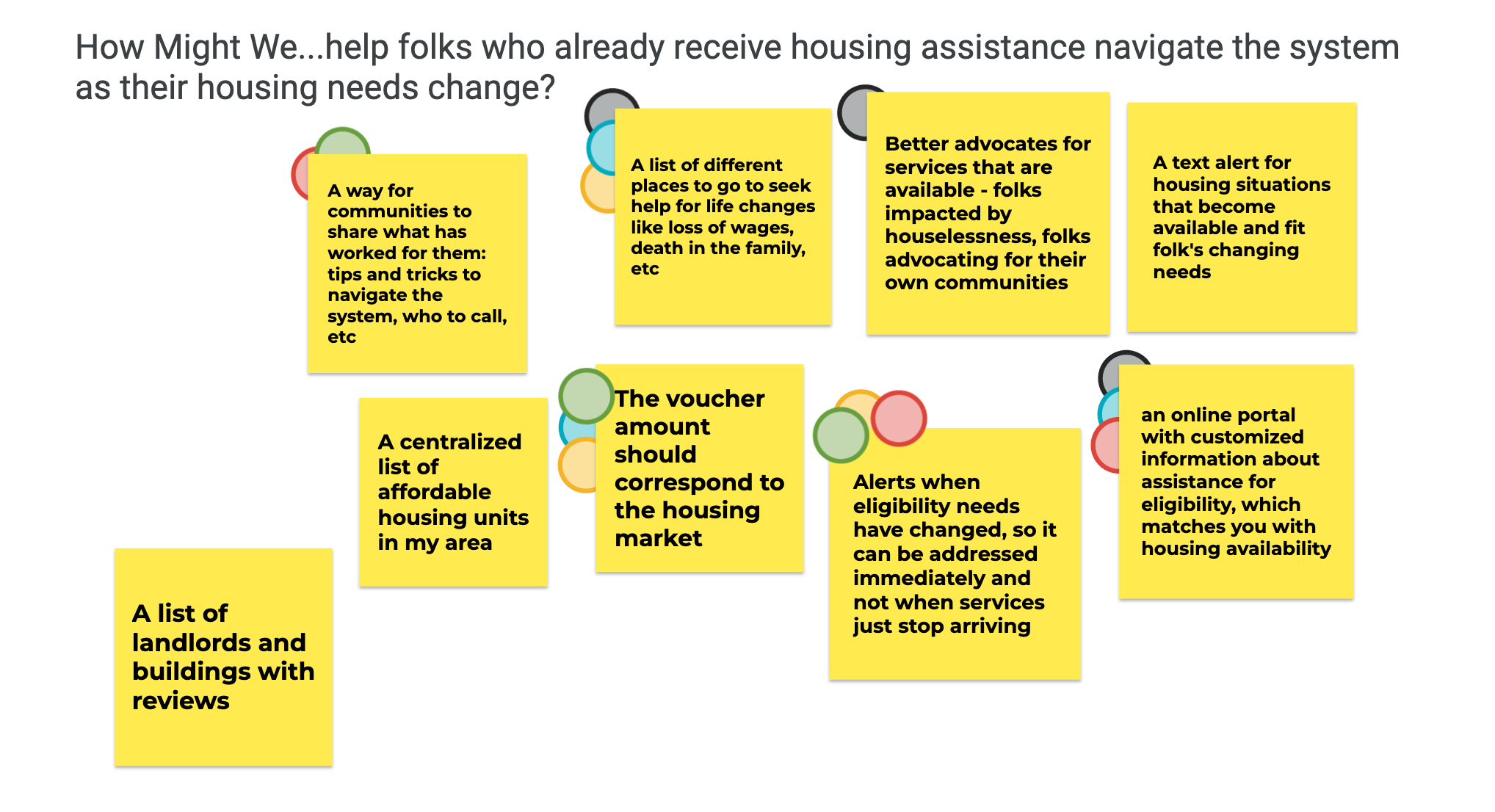
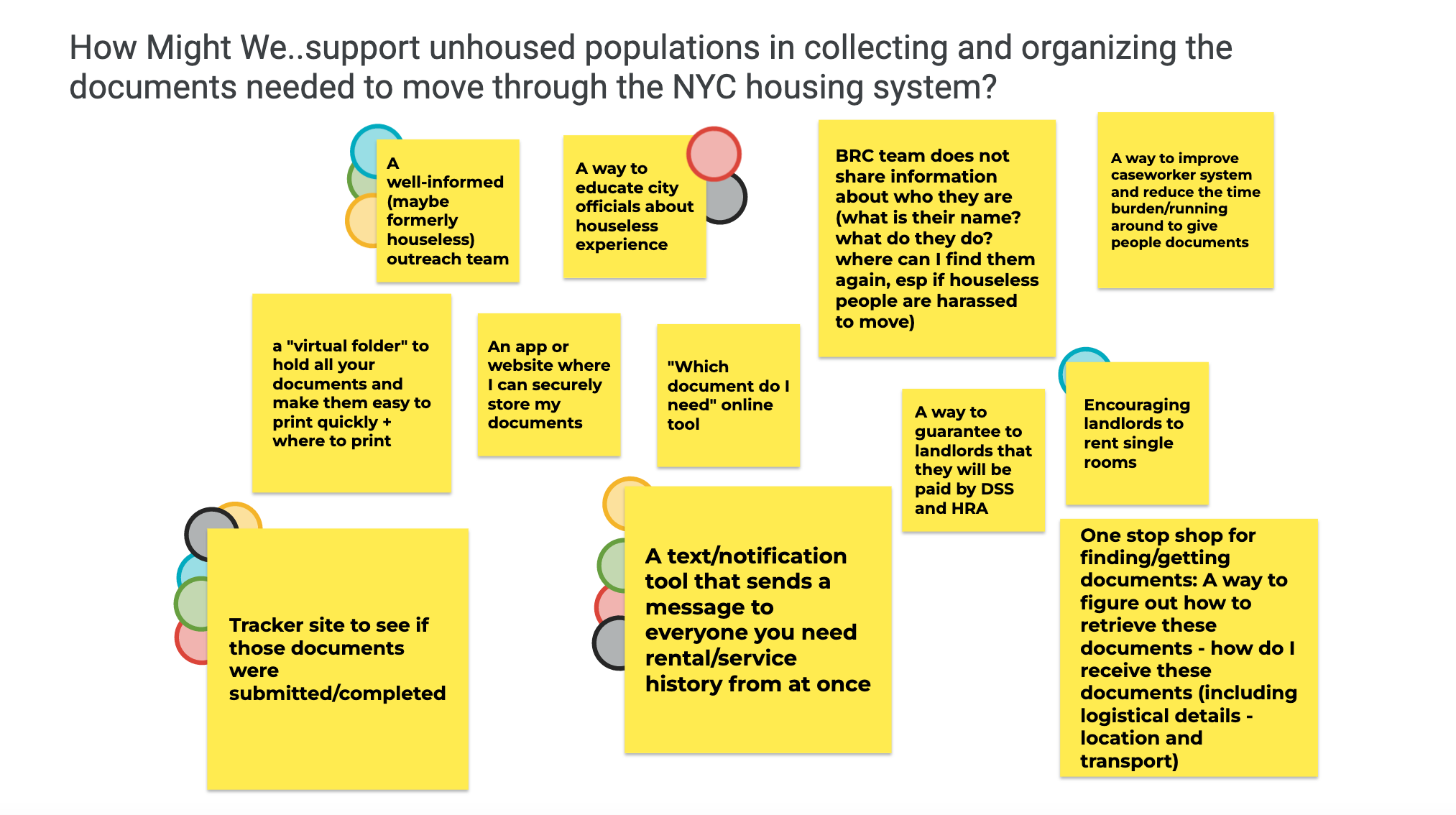
After these conversations, I conducted a co-design session with two community activists to generate new ideas for services in this space. To facilitate the co-design session I created two “How Might We” — questions I generated after reviewing our research so far. Then each participant jotted down ideas on post-it notes, and finally all participants voted on their favorite ideas. Some of the ideas generated in that session can be seen in the images below.
Our solution: shedding light on the confusing documentation process
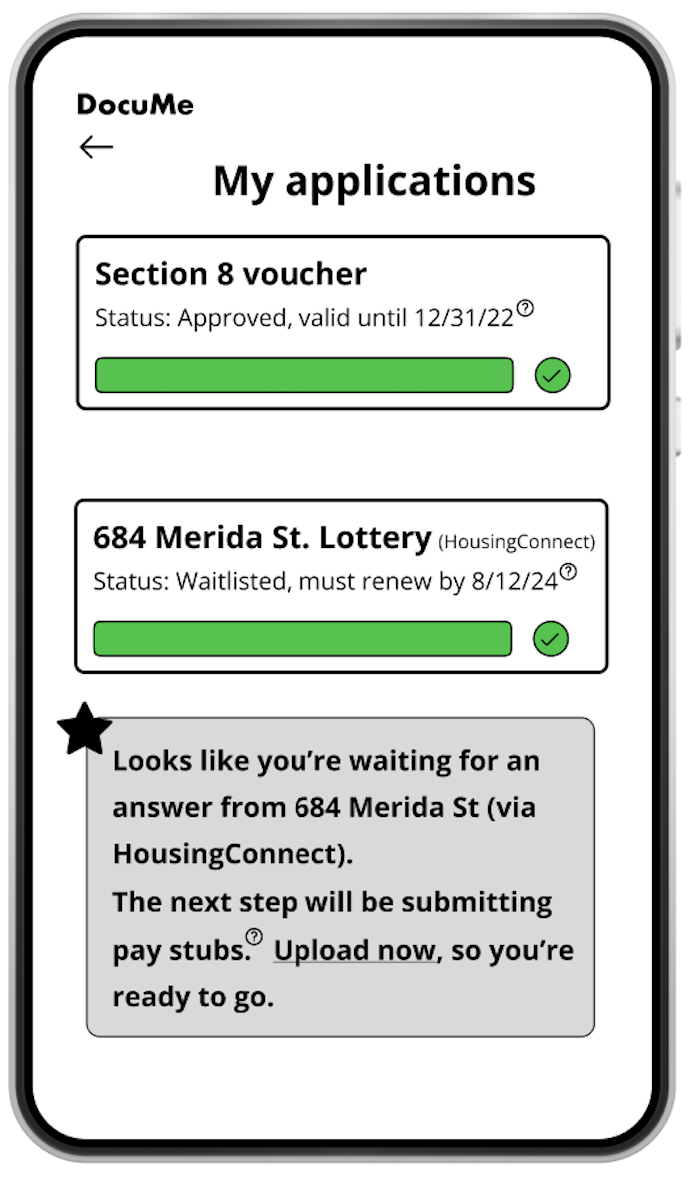
Our evaluative research shed light on the fractured application and documentation processes people encounter when applying for shelter and housing, and one of the most-voted upon ideas in our co-design session was a tracker site to see if documents had been submitted.
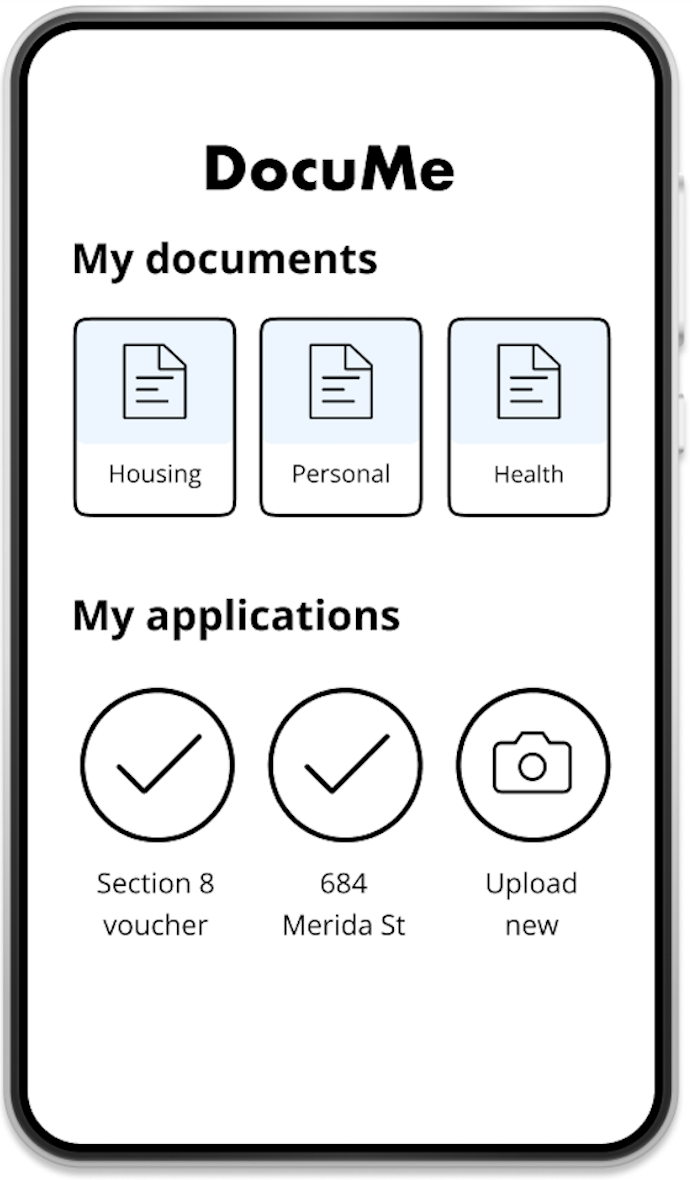
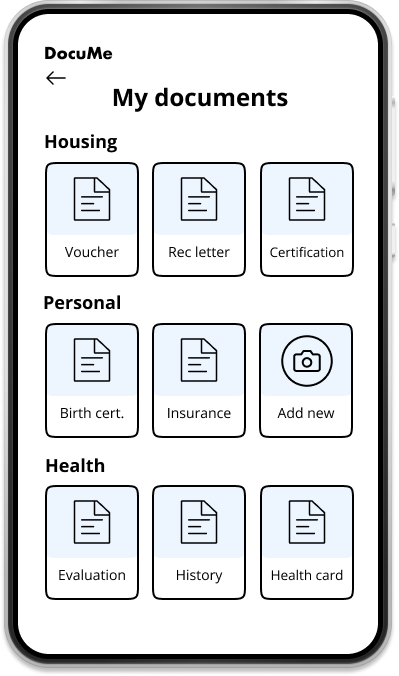
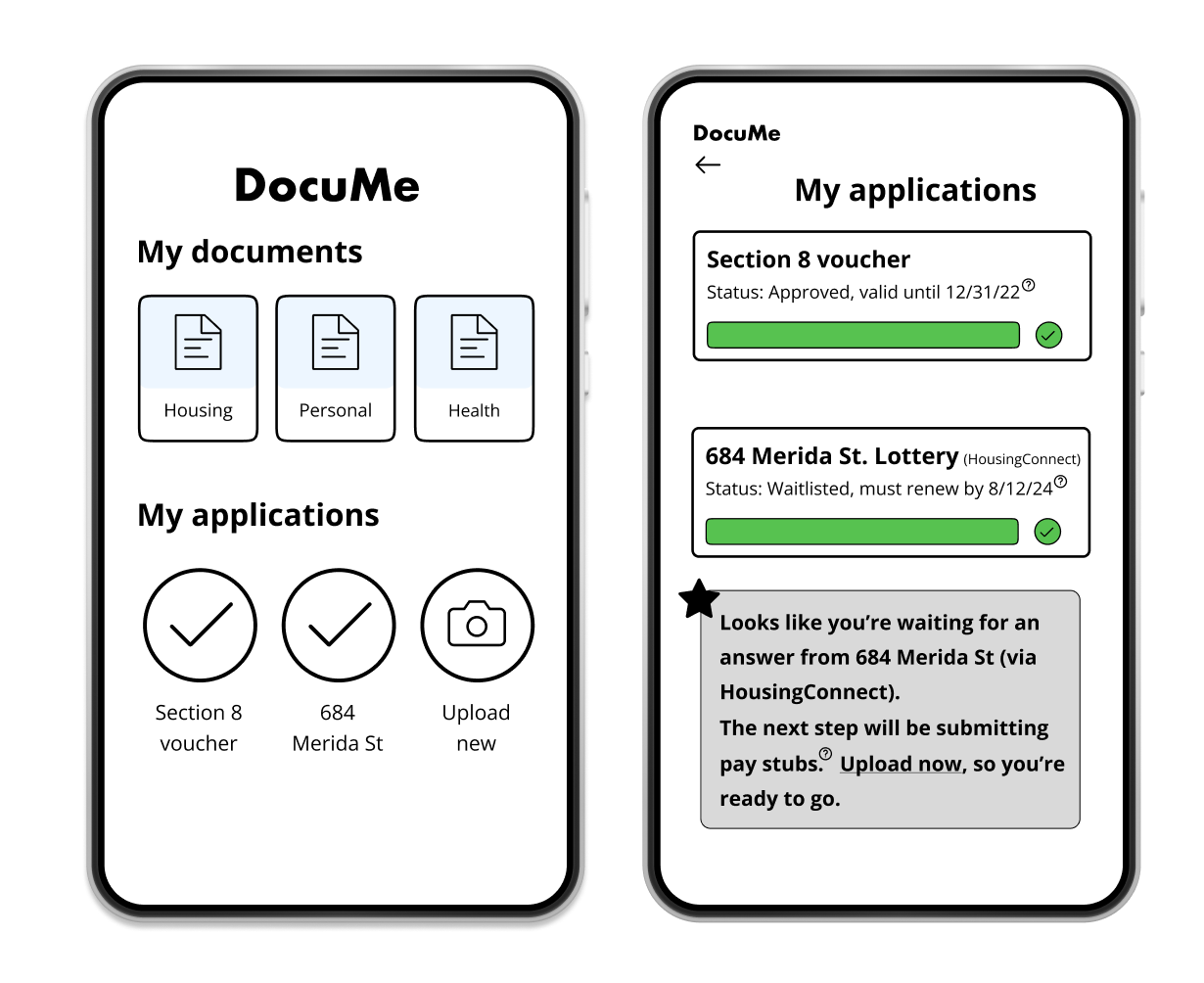
Based on this, I created wireframes for our final proposal: DocuMe, a document storage and organization solution with educational features to empower New Yorkers navigating the housing system.
Click here to see the final deck for this sprint and see the prototype below in action.